
Michele Larrow, Regional Co-Coordinator
You never know what treasure you might find in a book recommendation from a fictional character. I was reading Christopher Morley’s charming 1917 novel, Parnassus on Wheels, about a book seller who travels in a large single-horse wagon to bring books to rural readers along the East Coast. The “Professor” Roger Mifflin, sells Parnassus to Helen McGill and talks about the pleasures of life on the road. On rainy days, he and his dog “would curl up in the bunk and smoke and read. I used to read aloud to Bock: we went through ‘Midshipman Easy’ together, and a good deal of Shakespeare. He’s a very bookish dog” (82). The title Midshipman Easy made me think of Austen’s midshipmen: William Price in Mansfield Park and Dick Musgrove in Persuasion. A quick internet search showed that Mr. Midshipman Easy was published in 1836 and was written by Captain Frederick Marryat, R.N., who started as a midshipman in the British Royal Navy in 1806, eventually ascended to the rank of post-captain, and published many novels in the 1830s and 1840s about life in the British Royal Navy during the Napoleonic Wars. It looked like I found my next project!
Captain Frederick Marryat
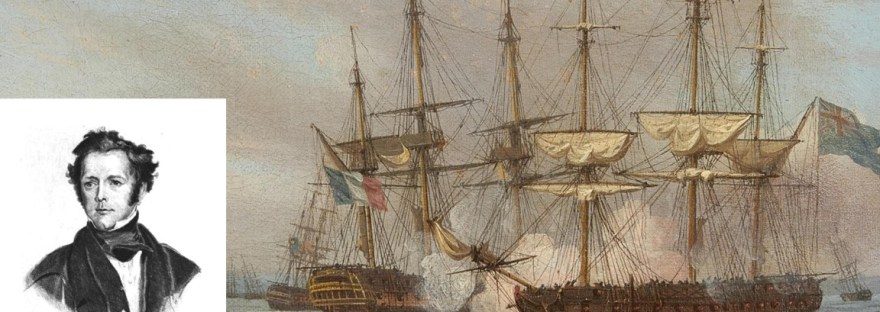
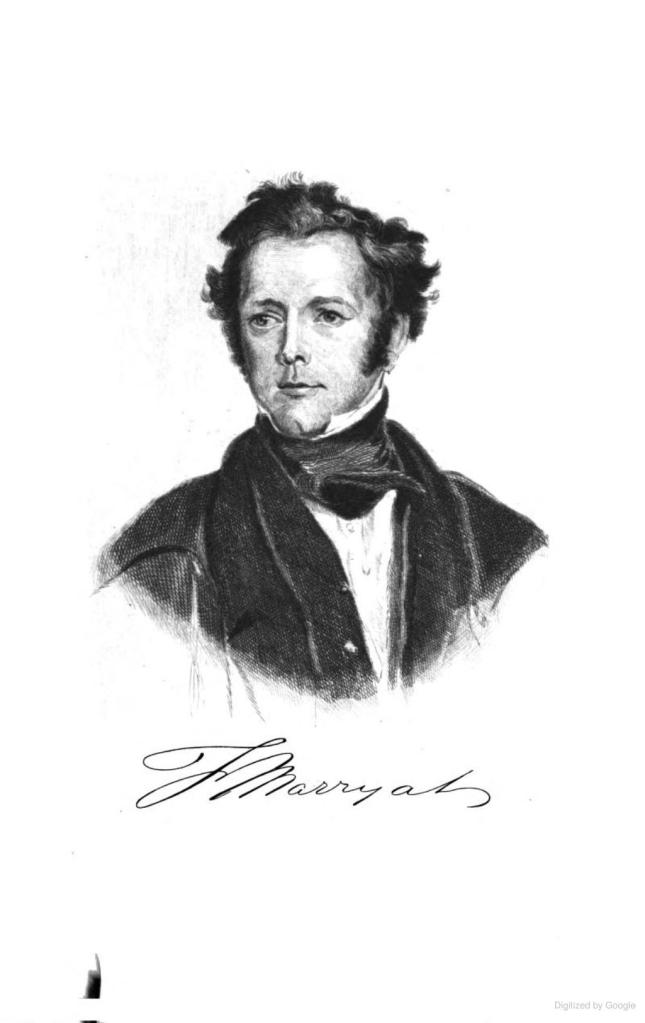
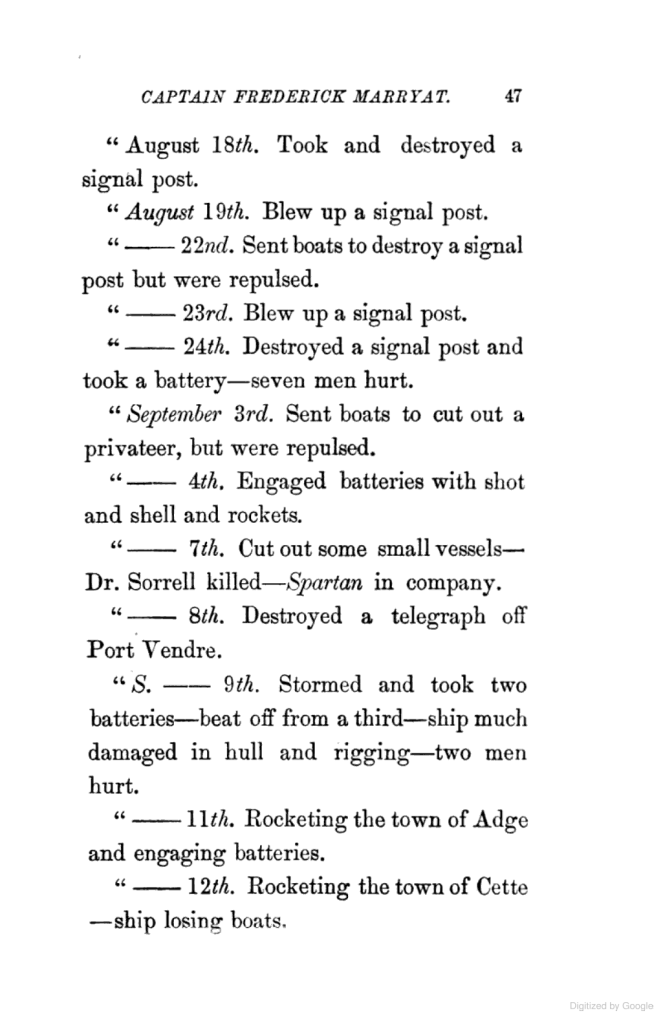
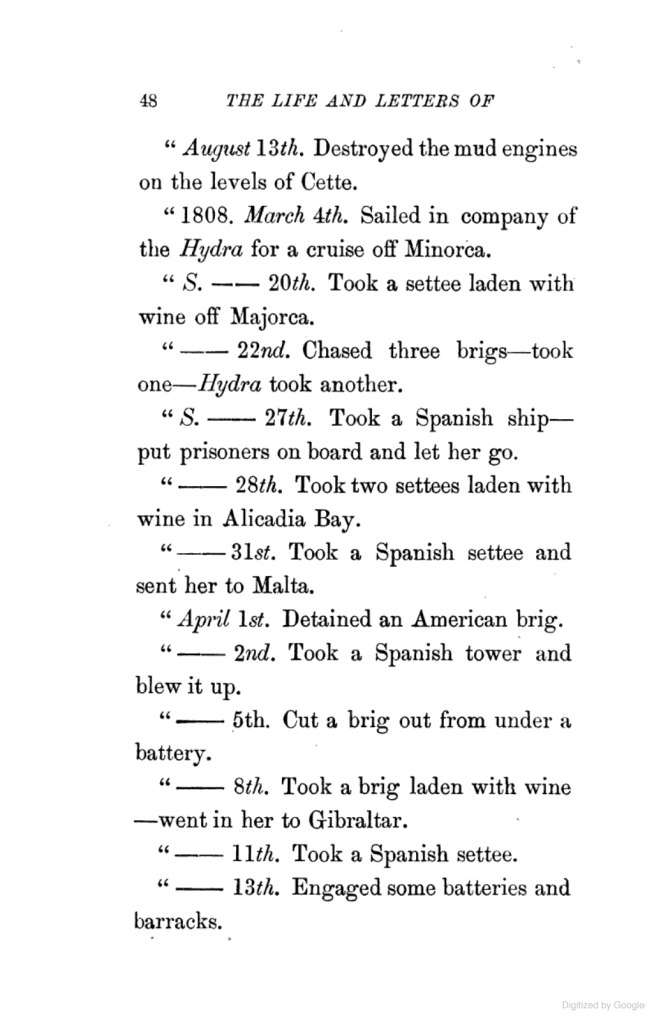
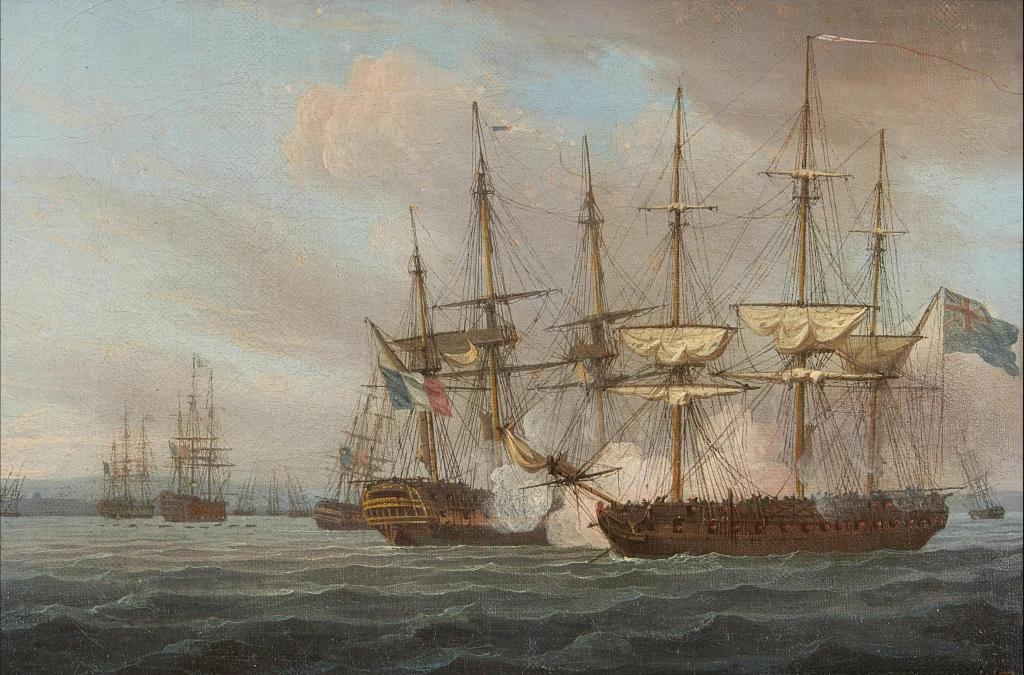
We have a wealth of information about Captain Marryat’s life from the Life and Letters of Captain Marryat (hereafter LL), written in 1872 by Florence Marryat, his daughter (see Illustration 1.1 for an engraving of Marryat based on an 1835 portrait). Frederick Marryat was born in 1792 to a large gentry family. His father was a member of Parliament. He had an unhappy childhood and ran away several times, finally getting his father’s permission to enter the navy as a midshipman in 1806 aboard HMS Impérieuse, a 38-gun fifth-rate frigate[i] captained by Lord Cochrane (Johnson xii-xiv). Marryat’s journals reveal that he admired Lord Cochrane greatly and “(his) daring gallantry and cool judgment are accredited to most of Marryat’s captains” (xiv). During his three years on the Impérieuse, Marryat was engaged in the Mediterranean and was wounded three times (LL Vol I 53). Excerpts from his journals from the period 1807-08 (LL Vol I 47-48, see illustration 1.2 and 1.3) show how active the frigate was against both merchant and enemy ships, how often men were injured, and how they fought both on land (in attacking coastal gun batteries and signal posts) and at sea. Marryat earned a commendation from his first lieutenant for his bravery in the 1809 Battle of Basque Roads (LL Vol I 66-7; Illustration 1.4 is a painting of the ship in the battle). In 1812 he became a lieutenant and “his cruises were uneventful”, although he had several injuries (Johnson xvi). He became a Commander in 1815 (at 23; LL Vol I 78). He “has sailed in the North Sea, in the Channel, in the Mediterranean, and along the East Coast of America from Nova Scotia to Surinam” (Johnson xvii). Over the course of his service, starting when a midshipman, there were 27 commendations for when Marryat “attempted to save the lives of others at the risk of his own” (LL Vol I 75). For Johnson, “It is tolerably obvious that, both as midshipman and lieutenant, he evinced the cool daring and manly independence that characterises his heroes” (xvii).
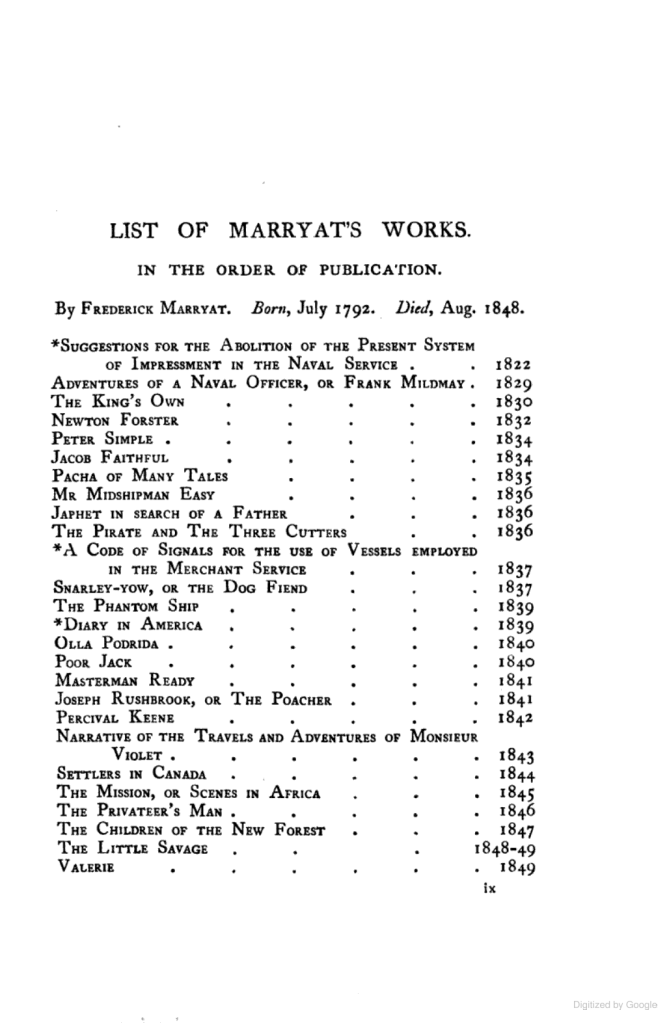
After the peace of 1815, Marryat left the navy for a couple of years. During that period, the “code of signals for the use of all merchant vessels of all nations” was developed and brought into use in several countries, for which he was thanked in 1817 by the shipowners society (LL Vol I 80). In 1819 he married, was elected a fellow of the Royal Society, and returned to the navy to command a sloop later that year (LL Vol I 79-80). Marryat’s ship was assigned to patrol the waters around St. Helena, where Napoleon was in exile. He was there for Napoleon’s funeral, and drew his body lying on his deathbed, which was published as an engraving when he returned to England soon after (LL Vol I 83-85). Marryat’s first publication was in 1822, a pamphlet arguing against impressment, the naval practice of taking men against their will to work as seamen. In the 1820s he saw service in Burma and commanded the Larne and then the Ariadne. He was promoted to post-captain and awarded the Order of Companion of the Bath in early 1827 in recognition for his service (LL Vol I, 150). He left active service in 1830 to focus on his writing, already having had some success with his 1829 novel, Adventures of a Naval Officer, or Frank Mildmay. Marryat wrote that his first novel, Frank Mildmay, has a fictional hero and heroine but that “the work in itself is materially true, especially in the narrative of sea adventure, most of which did (to the best of our recollection) occur to the author” (LL Vol I, 198-199). His other books are “wholly fictitious in characters, in plots, and in events” (LL Vol I, 200) but full of real naval detail. Writing for financial reasons to support his large family and his expensive spending habits (Johnson xxiv), he produced several more novels, including some children’s books, in the late 1840s (see Illustration 1.5 for a list of all his publications). He traveled in Europe and America in the 1830s and 1840s, writing about his American adventures. He died at home in 1848 after a period of ill health (xxix-xxx).
Illustration Set 1
The Works of Frederick Marryat
Marryat’s works were popular and reprinted many times in the 1800s and into the 1900s in both Britain and the United States. Several of the novels had been first serialized in the magazine Marryat edited from 1832 to 1835, The Metropolitan Magazine (Johnson xix). In the early 1840s, Marryat was attacked for publishing other works serially in newspapers and he said he would rather “write for the instruction, or even the amusement of the poor, than for the amusement of the rich” (LL, Vol II 105). His admirers included Joseph Conrad for his “youthful glamour and headlong vitality” (1919, quoted in Southam 34); Washington Irving, who wrote to Marryat in 1830 that he finds his “chivalry of the ocean quite a new region of fiction and romance” (LL Vol I 160-1); William Makepeace Thackeray, who enjoyed reading “my dearly-beloved Jacob Faithful” while ill (quoted in LL Vol I 211; this was published in 1860 in his Roundabout Papers essay “De Finibus”); and Virginia Woolf, who celebrated his “power of drawing character” (44). In the 1830s and 1840s, he was friends with Charles Dickens and “a merry circle of literary Bohemia” (Johnson xxiv) who included novelist Lady Blessington, Harrison Ainsworth, Clarkson Stanfield, and George Cruikshank and “many others of equal celebrity” (LL Vol II 114). Captain Marryat’s Novels were re-published by two publishers in 1896: the J. M. Dent edition editor R. Brimley Johnson chose Peter Simple as the first volume and W. L. Courtney highlights both Peter Simple and Mr. Midshipman Easy as excellent works in his introduction to the Peter Simple Routledge edition. This blog will focus on those two novels and how the early nineteenth century naval life Marryat wrote of gives the backstory for Austen’s naval characters. [Note: there are plot spoilers ahead.]
Peter Simple (1834)
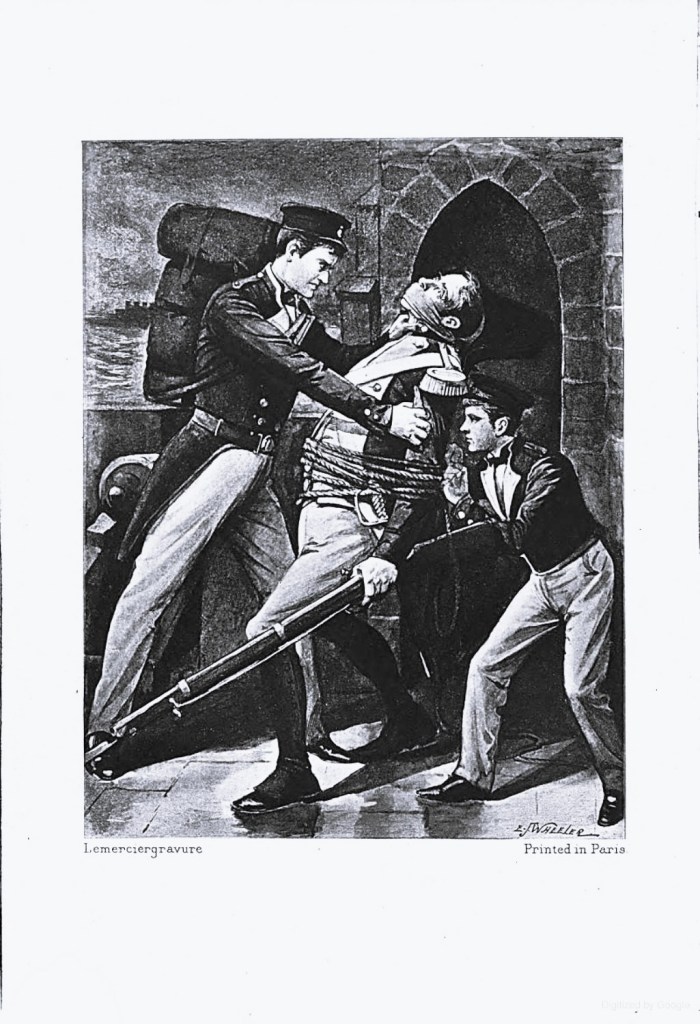
Peter Simple is a long novel (450-600 pages depending on the edition) that tells the story of Peter from his entry in the navy as a midshipman at 14 to his becoming a captain in adulthood. His grandfather is a rich and politically powerful Viscount, but Peter’s father is the neglected youngest son who is an unhappy and financially strapped clergyman. At the beginning of the story, Peter is naïve, gullible, and slow-witted but he has good qualities such as being honest, compassionate, and honorable; he is inherently a gentleman. Over the course of the book, Peter serves under several captains: his first, Captain Savage, is skilled at managing the frigate Diomede (50 guns, fourth rate)[ii] and is a good leader. Many of the other captains he serves under have comical flaws (Captain Kearney, a liar; the indolent Captain Horton, “the Sloth”; and Captain To, who is managed by his wife, on board; eats only pork; and raises pigs onboard). As a midshipman, Peter is mentored by Terrence O’Brien, an Irish master’s mate, who teaches Peter all about naval life and the how a ship runs. Peter helps O’Brien get promoted to lieutenant through Captain Savage and the admiral after he saved Peter’s life when Peter was wounded by the French. When Peter and O’Brien are taken prisoner, Peter meets his love-interest, Celeste and her honorable father, an Irishman who is a high-ranking French officer and lets Peter and O’Brien stay with them while Peter heals. As French prisoners, Peter and O’Brien are moved around quite a bit and eventually they escape from a French prison (see Illustration 2.1), cross France into the Netherlands, follow the Scheldt to the North Sea, and find a British cutter to take them back to England.
O’Brien and a few of the other warrant officers teach and support Peter, share their stories, and try to protect Peter from harm and injustices. As an adult, Peter helps them as much as possible in their careers. Peter uses his family’s interest while his grandfather still lives to get a posting after they have been prisoners and later a promotion and posting for himself and O’Brien after Peter passed his lieutenant’s exam. O’Brien and Peter work as Commander and second lieutenant on the sloop Rattlesnake (16 guns[iii]) and have success during their time together. Peter’s uncle inherits the title when his grandfather dies and throughout the rest of the story, he seeks to cheat Peter out of being the heir to the title after he dies (since the uncle does not have a legitimate son). Peter is forced to separate from O’Brien’s protection through his uncle’s machinations, and he is put on a ship as first lieutenant with Captain Hawkins, who is a poor leader with no combat experience and, unknown to Peter, is the illegitimate son of his uncle. Peter goes through many hardships, including a court martial brought by Captain Hawkins, an attack by highwaymen, and long imprisonment in Bedlam (instigated by his uncle) until he is released through the intervention of friends. When his uncle and the fake heir die unexpectedly, Peter inherits the title, marries Celeste, and returns to the navy as a post-captain at the request of the First Lord of the Admiralty. O’Brien also prospers as a captain, kills Captain Hawkins in a duel, and marries Peter’s sister.
Mr. Midshipman Easy (1836)
And thus was our hero educated until he arrived at the age of sixteen, when he was a stout, good-looking boy, with plenty to say for himself,—indeed, when it suited his purpose, he could out-talk his father.” (Captain Frederick Marryat, Mr. Midshipman Easy 27)
Jack Easy is the only son of an eccentric wealthy man and his wife who has been raised with much indulgence. A family friend convinces his father to put Jack in school and then the Royal Navy, and he is a midshipman on board the Harpy, a 16-gun sloop[iv] commanded by Captain Wilson, a distant relation to whom his father has loaned a significant amount of money on very generous terms. Jack, like his father, is a “philosopher” who believes in the equality of man and who will argue a point with anyone. He must learn how a hierarchy works in the Navy and how to apply himself. Jack is charming and makes friends easily, especially since he is generous with his money. He forms a close relationship with another midshipman, Ned Gascoigne; and they have many adventures. He also has several enemies on board because he challenges bullies and his wealth is resented. He is challenged to a duel by the boatswain and the purser’s steward, who both dislike him, and a three-way duel/farce ensues where Jack is the only one to escape unscathed. Jack refuses a humiliating punishment of mast-heading given by the master for no reason except dislike, but the captain convinces him that he must obey a bad order if it is from a superior and then complain to the captain later. Jack agrees to the punishment to set a good example for the crew and the captain later chastises the master. Jack is brave and spirited takes many risks in service of his country.
Jack’s most interesting relationship is with Mesty (his nickname given by British sailors), an Ashantee warrior prince from Africa who escaped enslavement in America, went to England on a merchant ship, and then joined the British navy. Jack treats Mesty as an equal and is much loved by him. Mesty’s talents are wasted as a servant on the ship, and he teaches Jack all he has learned about all aspects of running a ship and naval warfare. With Mesty’s guidance, Jack captures a Spanish merchant vessel after he has ignored orders to return to the sloop after the boats attacked a convoy. Jack loses contact with his ship and the ship’s thinks they are all dead. The sailors in Jack’s charge leave the captured ship with the cutter to go to a deserted island and enjoy the spoils from the prize, essentially in mutiny. Jack and Mesty must wait in the captured vessel because there is no crew to sail her and Jack learns Spanish over the two months from a Spanish sailor. Eventually, some of the men return to the merchant vessel and Jack is able to find the Harpy. He is forgiven his disobedience because of the treasure on the vessel, which brings prize money for the ship’s crew. Jack both encourages the captain to promote Mesty, who becomes a corporal onboard, and seeks to soften the punishment for the mutinous sailors. When Jack took that Spanish merchant ship, he met a young woman, Agnes, who is headed to her family in Italy and later he and Gascoigne save her family members from attack at their home in Italy. Jack’s relationship with the family is blocked by an evil friar, who later tries to kill Mesty but is killed by him. Eventually, Jack returns to England when his father is reported to be mad and leaves the navy (still a midshipman), much to the disappointment of his naval superiors. After Jack inherits the family estate, Jack and Mesty head back to Italy in a ship as registered English privateers with a hired crew to bring back his fiancée and her brothers. In England, the couple are married after Agnes becomes a protestant and Jack settles down to run his estate with Mesty as his major domo. Jack becomes a Conservative member of parliament, having eschewed his earlier beliefs in equality for all.
Illustration Set 2
Marryat’s Works Give the Backstory for Austen’s Naval Characters
“You have difficulties, and privations, and dangers enough to struggle with. You are always labouring and toiling, exposed to every risk and hardship. Your home, country, friends all quitted. Neither time, nor health, nor life to be called your own.” (Jane Austen, Persuasion 254)
Anne’s passionate acknowledgment to Captain Harville of her awareness of the risks of naval life helps convince the overhearing Captain Wentworth to write his declaration of love. Captain Marryat’s novels provide present-day readers with a detailed backstory for the “difficulties, and privations, and dangers” of navy life alluded to by the naval characters in Persuasion and Mansfield Park. Over his naval career, Marryat anchored in most of the English sea ports, visited the foreign stations, and fought in the seas and oceans that are mentioned in Austen’s two naval novels, and he takes his characters to those same places (LL Vol I passim). He gives multiple examples about what it was like for British navy ships to take merchant vessels, privateers, and enemy ships, including the use of smaller boats from the main ship. He explores the importance of prize money to all the ship’s company, the role of “interest” in promotion, and gives the details of Peter Simple’s lieutenant’s exam. He shows the danger of a tropical climate and disease to crew members and dramatizes the challenges of managing a ship in a gale or other extreme weather. Marryat novels provide a detailed account of the dangers, heroism, comradery, and infighting that existed in the British navy that Austen’s characters would have known.
Important Naval Locations
English Naval Ports
Persuasion abounds in the mention of English ports: the Sound off Plymouth, on the southwest coast, is where Captain Wentworth anchors on return from the West Indies (P 71; note 6 on p. 356: the Sound is unprotected from winds), Deal (P 77 where Mrs. Croft stays when Captain Croft is in the North Seas; note 16 on p. 358: a working port in SE England), and North Yarmouth (P 99; note 12 on p. 361: Greater Yarmouth naval base on the Norfolk coast for the North Sea and Baltic Fleets). Captain Wentworth travels from Plymouth to Portsmouth to console Captain Benwick after his fiancée’s death (P 116; a distance previously noted to be 175 miles note 13 on page 357). Portsmouth is more fully detailed in Mansfield Park Chapters 7 to 15 of Vol. III, and its importance as the fortified headquarters of the British Navy (MP, 720 note 4) is revealed in many ways. We learn that it is “a sad place” unsafe for women to walk unaccompanied (466), take a tour the large dock yard with Henry Crawford and Fanny (Vol III, Chapter 10), and hear about the preparation for leaving and launch of William’s new ship (Vol III, Chapter 7). In Peter Simple, Peter begins his career at Portsmouth as a naïve midshipman: he is solicited by a prostitute and unwittingly makes a date to see her later (Chap IV), is cheated out of money (Chap IV), and is attacked by a group of seamen’s wives when he is part of a pressgang crew trying to impress their husbands into naval service with a few marines (Chap X). Peter is based at Yarmouth when he is on convoy duty in the Baltic Sea (PS Chap LV-LVII). In Plymouth, the ships in Peter’s convoy that are headed to the West Indies wait until all ships are ready to sail and Captain Savage exchanges ships with Captain To, who fears the climate (228). Jack Easy starts his naval career at Portsmouth also, first living the high life in one of the hotels for three weeks until his captain directs the first lieutenant to hunt him down (MME Chap VIII). The Portsmouth chapters in Peter Simple might be an homage to the Portsmouth chapters of Mansfield Park, since Marryat was an Austen fan (LL Vol I 199).
Foreign Stations and Ports
Mrs. Croft tells Mrs. Musgrove that she has been to Cork (P 76; station for the Irish squadron, note 15, 357), Lisbon (base for the Mediterranean fleet, ibid) and Gibraltar (70; Royal Naval base at the entrance to the Mediterranean, note 8, 356) as well as Bermuda and the Bahamas (both British colonies off the coast of the Southern United States; Bermuda had a Royal Naval station ibid, 356-7). We know that William Price has been to Gibraltar (MP 274) and Sicily, where he gets Fanny’s amber cross (MP 295; note 1, 706 Sicily was a nodal naval base). In Mr. Midshipman Easy, the crew heads to Gibraltar to bring in prizes to the admiral there, and they have a two-week rest at Gibraltar (Chap XVII). Peter’s ship stays at Gibraltar for three weeks while the ship is “stripped to refit” the rigging, painted, and cleaned (PS 125) and Peter gets to go onshore after he has helped with all the onboard work for several days (Chap XVI). Jack Easy goes to Sicily without permission with another midshipman who speaks Italian after he was involved in a duel and there meets Agnes, his love interest whom he earlier released from a merchant ship he captured, and is feted by her family (MME Chap. XVII-XVIII). He also goes with his ship to Sicily to deliver dispatches and is given leave to visit Agnes and help defend her family from a planned attack (MME Chap XXX) and later goes to deliver prizes (Chap XLI). Gibraltar and Sicily are the only two foreign stations mentioned in Marryat’s two novels that were mentioned in Austen’s works.
The Mediterranean, West Indies, and Atlantic Crossings
During the Napoleonic Wars, Britain was fighting the war in many areas and not just against the French. Captain Wentworth was in the Battle of St Domingo (P 28; off present day San Domingo), went to the West Indies and back in the Asp (70), cruises off the Western Islands (72 now called the Azores note 10, 356) and also served in the Mediterranean (72). Admiral Croft was in the Battle of Trafalgar and served in the East Indies (24; note 10, 346 East Indies could apply to India, South-East Asia, Indonesia, or the Philippines). As a midshipman, William Price has been “in the Mediterranean—in the West Indies–in the Mediterranean again” (MP 275). Both Peter Simple and Mr. Midshipman Easy serve in the Mediterranean and the island of Malta, off Italy, is the naval port visited most often by Jack’s ship, although the admiral is in Gibraltar (according to Fulford, Malta was recently taken by the British from the French in 1802, 179). Jack becomes friends with the British Governor of Malta and frequently visits to tell of his adventures on land and sea. In the West Indies, Peter Simple’s ship is based at Barbados, a British colony where the crew spends time on land and get to know the local people some (Chapter XXXI and Chap XLIII). Their ship is sent to engage in battles off Martinique (a French colony) and St. Thomas (a Danish colony) and even carries dispatches up to Halifax in Canada (Chap XXXVI ), where Austen’s brother Charles was stationed and Marryat visited too in 1811 (Southam 34-35). While Jack Easy’s naval service occurs mainly in the Mediterranean, Peter Simple visited almost every area of naval action that is mentioned by Austen during his long time in the service.
Naval Action during War
Fleet Battles
Captain Wentworth was made commander after the Battle of St. Domingo (P 28) while Admiral Croft was in the Battle of Trafalgar (24). The only large naval battle mentioned in Marryat’s two works is when the quarter-master Swinburn tells Peter about the Battle of St. Vincent (which happened off the coast of Spain in 1797) when he was on a ship with Nelson (PS Chap 33 and 35). Perhaps Marryat did not choose to portray battles directly due to the complexity of representing the combat that would have occurred.
Ship to Ship Combat
Captain Wentworth mentions battling a French frigate coming back from the West Indies in his sloop the Asp (a smaller ship than a frigate in terms of guns) and implies that his ship had significant damage (“our touch with the Great Nation not having much improved our condition” P 71). Peter Simple has an example of how large ships would fight each other guns to guns at close range and these fights usually had many wounded and killed and damage to the ships (PS Chapter 55 against a Dutch brig). In Mr. Midshipman Easy, the Aurora (28 guns sixth-rate frigate[v]) takes on a Russian frigate at dusk into night off Corsica, where the ships broadside each other with cannons several times, resulting in the Aurora knocking over the mast of the Russian ship (273). When the Aurora rams the Russian ship, the British crew, including the captain, boards for hand-to-hand combat and they eventually take the ship, with a loss of 65 British and 200 Russian seamen and officers (MME Chapter XXIX).
Boats Attacking Enemy Ships
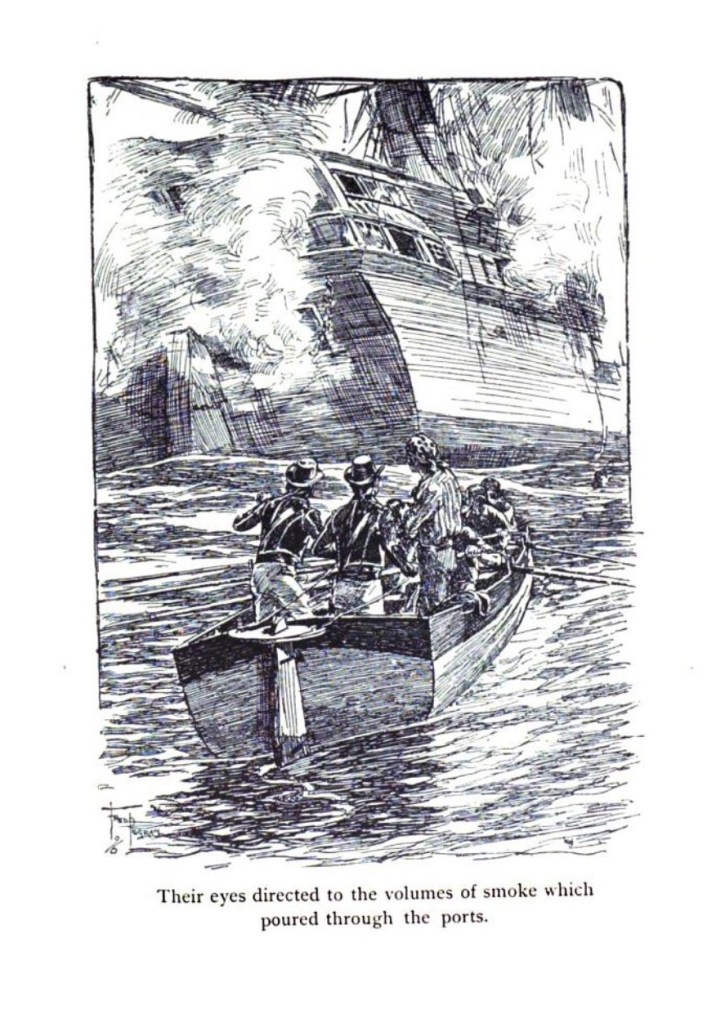
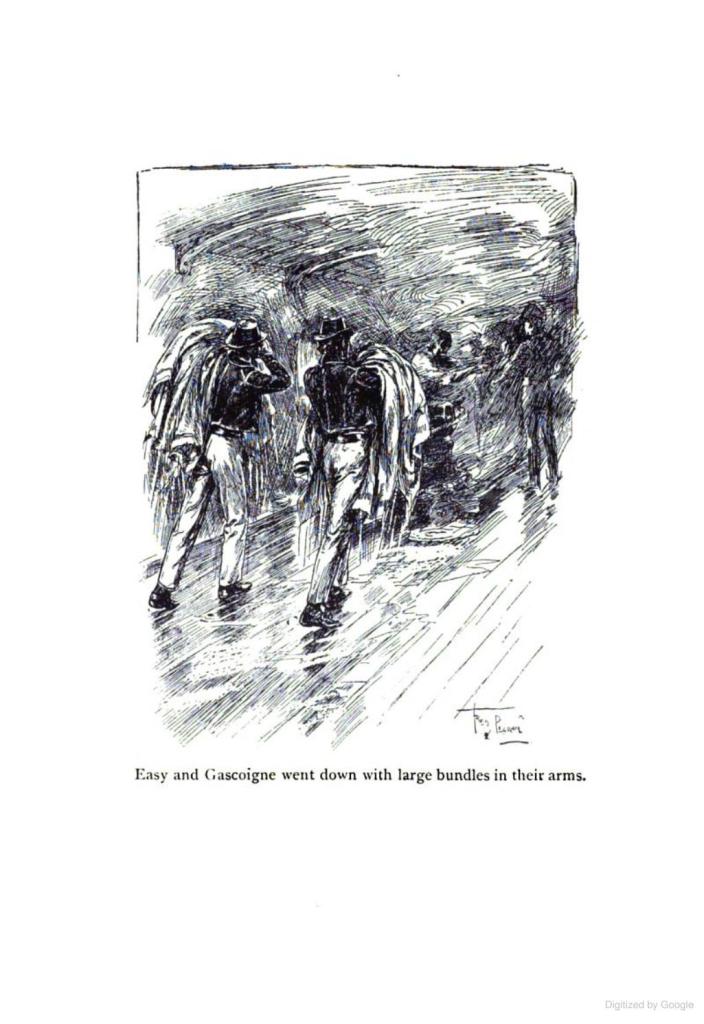
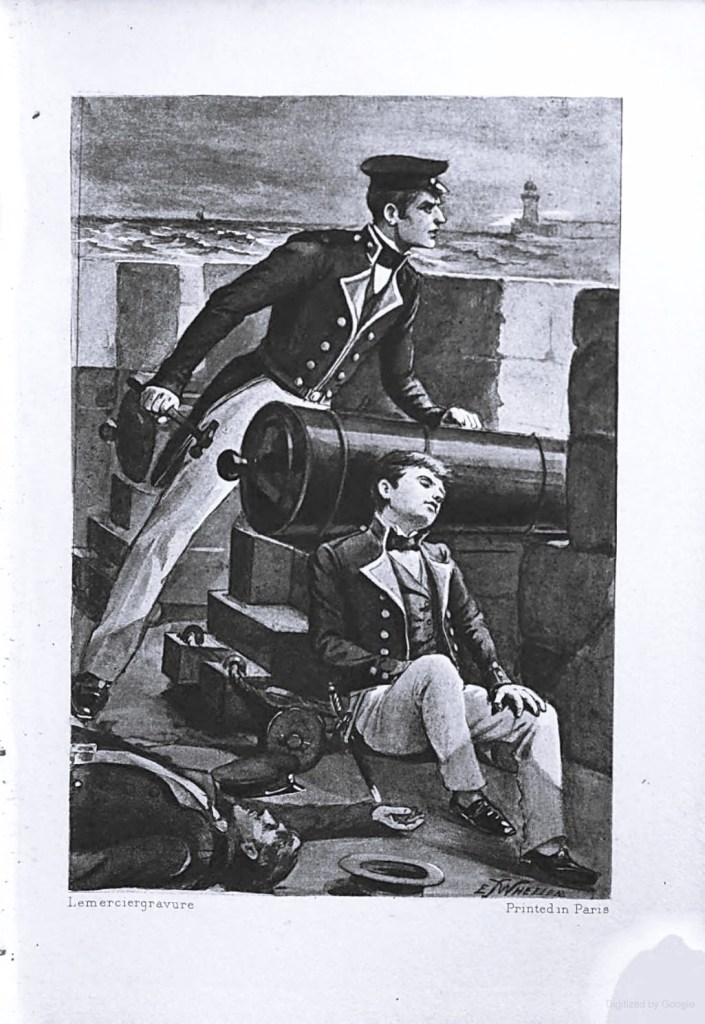
In Persuasion, Captain Wentworth mentions capturing “privateers enough to be very entertaining” (71) in the West Indies but does not detail how they did it. Privateers were ships were registered by a combatant country that were licensed to take enemy ships; in wartime, the British ships would attack enemy ships, privateers registered with enemy countries, or merchant vessels sailing under enemy flags. In Peter Simple, there is a detailed example of a “cutting-out expedition” (PS 280), where the frigate’s smaller boats (a launch, two cutters and a yawl 282) commanded by the boatswain, master, first lieutenant, and master’s mate (283-4) were sent out with a “fighting boats’ crew, which are selected from the very best men on board” (282) to take a privateer anchored in the bay off Danish-held St-Thomas by stealth, during the day when most of the crew was thought to be off the ship. The British boats faced gun fire from batteries on shore, fire from the Danish privateer crew on the brig and in smaller boats returning from shore, and bayonet and cutlass wounds from hand-to-hand combat when they land on the brig, resulting in several seamen wounded British (and a possible death of a severely wounded man who asked to be left behind) and the loss of the captured brig due to French cannon fire sinking it (PS, Chap XXXIII). When Jack and his cutter crew help attack a French ship, the first British cutter is sunk from French cannon fire, and then there is a great explosion from ammunition on the French ship after a pistol shot sets it off (see Illustration 2.2). Jack’s decision to have his crew wait to board allows them to save the other boat’s crew. (MME Chap XXII). Another use of smaller boat crews is to attack enemy gun batteries on the coast, a highly dangerous action. Peter Simple is wounded and the armourer is killed when their cutter crew attacks a French battery on the south coast of France. O’Brien refuses to leave the battery until he finishes spiking of the guns (driving a long nail into the cannon so the fuse cannot light, see Illustration 2.3) and can save Peter, but he and Peter are taken prisoner (PS Chapter XVIII). ). I have summarized just a few examples of the different types of naval action that Jack and Peter experience; these examples correspond well to the logs that Marryat kept as a midshipman (see Illustration 1.2 and 1.3), suggesting that Marryat’s novels are a realistic representation of what naval warfare was like in the Napoleonic Wars.
Promotion, Prize Money, and the Role of Interest
Prize Money and Promotion
Captain Wentworth was promoted from a first lieutenant to a commander after a battle in 1806 and has at some point been promoted to captain and given command of a frigate, the Laconia, and has made at least £20,000 in prize money during the war (P 28, 55, 81) For prize money, “the value of a captured vessels and its cargo was distributed to the crew of the ship that captured her, in a graduated scale from the captain downwards” (MP 719, note 1). Specific amounts of prize money are not mentioned in Marryat’s two novels, but like William Price’s goal to share his prize money as a lieutenant with his family at Portsmouth and save for a cottage with Fanny when out of the navy (MP 433). Peter and O’Brien send their prize money home and plan to support Peter’s sister after her father dies as both families are financially insecure (PS 97, 390). Getting a promotion to a higher rank meant a higher percentage of a ship’s prize money and a higher level of responsibility on the ship. Once the rank of first lieutenant is reached, promotion to commander and post-captain can occur when openings occur on ships through death or sickness that results in someone leaving service or by meritorious service, especially in battle or through prize money. After Captain Savage dies of accidental copper poisoning, First Lieutenant Falcon is promoted to commander, and the Admiral shuffles a few other officers to get a more experienced captain onto the frigate and Falcon onto a sloop (PS Chap XXX-XXXI). Captain Wilson is promoted from commander to post-captain and posted to a frigate Aurora and First Lieutenant Sawbridge becomes a commander of the sloop Harpy after Jack’s capture of a merchant vessel with 14,000 dollars on board, a lucrative prize for his ship and the Admiral of that station (MME 108,135). There is almost a mutiny on board a ship near the end of Peter Simple because the crew has fought valiantly against a Dutch brig, with many British sailors killed and wounded, and Captain Hawkins, who has not had combat experience, refuses Peter’s advice to take the last step to capture the vessel and another British ship gets the capture and the prize money. The crew is very angry and voice their belief that the captain is not fit. Peter must defend the captain’s inaction to maintain order on the boat but is later brought up for a court martial by Captain Hawkins (Chap LV). Marryat shows that all the ships’ crews and the admiralty are motivated by prize money and it can plays great role in promotion.
Becoming a Lieutenant
In Mansfield Park, William Price appears to have already passed his lieutenant’s exam but is unable to get a commission as a lieutenant (“that long thought of, dearly earned, and justly valued blessing of promotion” 273, also, 290 and note 19, page 705). Henry Crawford asks his uncle the Admiral to help, and William is promoted to become a second lieutenant and assigned to a ship. Once William is second lieutenant, he is already thinking about becoming a first lieutenant if the current first lieutenant is “out of the way” through action (MP 433). Peter Simple’s lieutenant exam takes place on a ship in Plymouth, the day after Peter has saved a drunk soldier who is drowning, ruining his only uniform. At his exam, the three captains review his logs and certificates, ask about navigation, seamanship, and one berates him for his attire. After learning through a newspaper that he was the person who saved a drowning man, the captains are kinder and ask if he knows how to club-haul a ship, which he does because he has witnessed Captain Savage do it. Peter passes and is told he is “a good seaman and a gallant young man” (Chapter XXXVIII 330-336).
The Role of Interest
At the start of Mansfield Park, Sir Thomas is described as having “interest” but as being unable to help Mr. Price due to his working for the Marines (4; note 6, page 641 defines interest as the power to obtain places or appointments through political clout”). When Sir Thomas hears that William has been invited to meet Henry’s uncle, Admiral Crawford, he is happy because “The Admiral he believed had interest” (MP 309). The Admiral writes to a friend who writes to the First Lord of the Admiralty and thus gets William’s commission to a sloop, the Thrush (346). In Persuasion, Admiral Croft tells Captain Wentworth that he was lucky to get a sloop after his promotion from lieutenant to commander and “with no more interest than his” (P 70). In Peter Simple, Peter asks his grandfather, Lord Privilege, to write to the First Lord after he and (newly promoted) Lieutenant O’Brien have escaped France to get them a new posting together and that letter succeeds (Chapter XXVI). When Peter gets a second letter from Lord Privilege to get his commission as lieutenant and O’Brien as a commander, his father tells him that his “grandfather’s interest was so great with the administration, that I might consider my promotion as certain” (Chapter XXXIX 343). Of course, interest can also result in the promotion of incompetent leaders, as Captain Horton (“The Sloth”) “was a young man of family who advanced rapidly in the service from interest” and his laziness made him occasionally seem brave and impervious to danger, such as walking rather than running from enemy fire. However, his laziness leads him to avoid any enemy engagement as a captain and the men on his ship do not like him (PS Chapter XXXVIII 324). Thus, in Marryat’s works, the political dimension of “interest” in naval promotions and ship assignments is clear; in Mr. Midshipman Easy, the political party is even named: “Gascoigne, by the interest of the Conservative member, soon attained the rank of post-captain” (MME 367).
Dangers of Weather, Climate, and Disease
Climate in Tropical Areas and Disease
In Mansfield Park, the “constant danger” Edmund says that Sir Thomas faces in going to Antigua probably includes the risk of disease in a tropical climate (147; note 22, 680 mentions both the danger of crossing the Atlantic and tropical disease). When Sir Thomas returns, he is “thinner and had the burnt, fagged, and worn look of fatigue and a hot climate” (208-209). In Peter Simple, there is a funny incident of the ship’s doctor and a few other officers using the dangers of a tropical climate to convince the ineffectual Captain To and his wife (the pig-raising and pork-eating couple) to swap for command of another ship when their ship has been ordered to the West Indies, focusing especially on Captain To’s high chance of death due to his heavy weight in a hot climate, that eating pork produces fatal dysentery in the tropics, and the risk of yellow fever (Chap XXVII, especially 225-7). Later in the novel, Captain Kearney suffers the “insidious attacks of a hot climate” in the West Indies and his “constitution appeared now to be breaking up” (316) by the time they get to Halifax with dispatches, where he dies after a few weeks (Chap XXXVII). In the Mediterranean, Jack’s ship has several cases of dysentery, which reduces the number of officers available for commanding the smaller boats and gives Jack a chance at a command of a cutter when they attack a convoy (MME Chap XIII). Scurvy is only mentioned in these two novels as something to be prevented with fresh food: after orders from the Admiral at Port Mahon, Jack is sent by his captain to Tetuan in Morocco on a mission to get bullocks “to drive the scurvy out of the Toulon fleet” (MME 224; Chap XXIII-XXIV). Marryat shows the very real risks of a tropical climate and disease that are a part of British naval life.
Extreme Weather
Captain Wentworth said he never had bad weather in the Asp until he returned to Plymouth, where he experienced a gale lasting four days when he was in the Sound that would have destroyed the ship if he had been out in the ocean. (P 70). In Mr. Midshipman Easy, the crew experiences a gale at sea with a lightning strike to the mast of the ship that destroys the mast and starts a fire in the coal hold. Jack helps to fight the fire, and the crew must prepare “jury-masts and jury-rigging” until they can get to a harbor to make repairs (MME Chap XXV-XXVI 246, see illustration 2.4). In one of the most exciting chapters of Peter Simple, there is a gale when the ship is near land and Captain Savage commands his crew to use a club-haul (dropping a temporary anchor and then releasing it) to avoid running aground on rocks and later expertly directs the control of the sails and the wheel in fierce wind to get the ship around a point of land, saving his crew from death from being dashed on rocks in both instances. While in the Caribbean, Peter faces a hurricane in a smaller boat with a crew rowing when they had been sent to capture prizes. Several of the crew are killed and some injured, including Peter, as the boat is thrown against the rocks on the French-held island of Martinique, where General O’Brien, Celeste’s father, is in charge. After Peter and his remaining crew help to look for survivors in wrecked buildings on Martinique, the British crew is patched up and allowed to return to their ship (PS Chaps. XLVII-XLIX).
Summary: Marryat Dramatizes Austen’s Allusions to the Danger, Heroism, Brotherhood, and Infighting of the Navy
Marryat’s works bring to life several aspects of the navy that Austen alluded to: the danger, heroism, brotherhood, and infighting. William Price has seen “every variety of danger, which sea and war together could offer” and had “the glory of heroism, of usefulness, of exertion, of endurance” (MP 275). In Persuasion, Captain Harville has “never had been in good health since a severe wound he had received two years before” and later is described as “a little lame” (P 101,105). Peter Simple and Mr. Midshipman Easy are full of instances of death or injury to the ship crews in naval combat, as discussed in the Naval Action section. Peter is shot in the leg by the French (PS Chap XVIII) and Jack Easy receives a cutlass wound in the fight to take the Russian frigate (MME Chap XXIX). Marryat also shows the dangers from bad weather, tropical climates, or disease and random hazards (such as the copper poisoning that killed Captain Savage in Peter Simple). As the novel plot summaries show, Marryat celebrates the joy and spirit of most of the sailors and officers getting ready for a naval battle or other missions and there are many examples of bravery and heroism. Like William Price, Jack and Peter are eager to learn naval skills from more experienced sailors and officers and to develop their leadership potential. The brotherhood of the navy that Austen shows in the relationship between Captain Harville, Captain Benwick, and Captain Wentworth in Persuasion is also shown with Jack and Peter’s ability to form strong relationships with their superior officers who mentor them and fellow midshipmen when they are friendly. Finally, Mary Crawford speaks of the “bickerings and jealousy” (MP 71) of the Admirals around Admiral Crawford (her uncle) and, when walking in Bath with Anne, Admiral Croft calls Admiral Brand and his brother “Shabby fellows . . . [t]hey played me a pitiful trick once–got away some of my best men” (P 184). Both Jack and Peter face many instances of peers or superiors acting from jealousy or dislike who seek to manipulate, unjustly punish, or thwart them. Marryat’s naval protagonists and Austen’s naval characters face the same dangers and share a similar heroism in serving their country and experience both friendship and rivalry among their naval comrades.
Captain Frederick Marryat and Jane Austen as Authors
The ‘Naval Officer,’ when ‘corrected,’ will be so improved that he may be permitted to stand on the same shelf with ‘Pride and Prejudice’ or ‘Sense and Sensibility’.” (Frederick Marryat, quoted in Florence Marryat LL Vol I 199)
As the quotation above shows, Marryat was a fan of Jane Austen’s work and sought to connect with her as an author. Most critics recognize that his skill as a writer does not approach hers in terms of plot, dialogue or narrative (see Woolf, Courtney, Johnson, and Southam). I find his plots when the characters are on land often unrealistic and sensationalized—for example, the murderous clergy, imprisonment in Bedlam, and repeated unlikely coincidences, with some last-minute saves that are truly unbelievable, everything that Austen mocked in her juvenilia. Reflecting English imperialism of his time, Marryat sometimes writes about other cultures with insensitivity (Fulford194; PS, Chap XXXI). The world he portrays is almost all men, with a few worrying mothers or insipid love-interests in the background. However, his descriptions of life on ship and what an officer or a sailor does feels real–“the world of 1806 is real to us and ordinary” (Woolf 42). His naval characters are “drawn vigorously, decisively, from the living face” (43). Virginia Woolf connects his fictional world to Austen’s world:
“he can create a world; he has the power to set us in the midst of ships and men and sea and sky all vivid, credible, authentic, as we are made suddenly aware when Peter [Simple] quotes a letter from home and the other side of the scene appears; the solid land, England, the England of Jane Austen, with its parsonages, its country house, its young women staying at home, its young men gone to sea; and for a moment, the two worlds, that are so opposite and yet so closely allied, come together.” (Virginia Woolf 44)
Fulford links Austen and Marryat to the works of Southey in his Life of Nelson (1813) and Coleridge in his Life of Sir Alexander Bell (1809) as promoting “models of British manliness on which a stable domestic society could be founded”, with officers as “the embodiment of the virtues necessary for command . . . such as patriotism, self-reliance, courage, paternalism, and, above all, attentiveness to duty” (187, 162). Compared to the three male authors, though, Austen “created positive models of femininity” in the “practicality, adaptability, and cheerful self-reliance” of Mrs. Croft and Anne Elliot’s focus on healthy morality and social usefulness (187-188). Despite his limitations, Captain Marryat does a wonderful job of creating a realistic and technically-detailed representation of life in the British Royal Navy during the Napoleonic Wars that helps modern Austen fans understand what Captain Wentworth, William Price, and the rest of Austen’s naval characters experienced on board a ship. I hope you will give his books a read!
Notes
[i] The website threedecks.org has a search feature for ships that tell the type of ship, number of guns, and class if rated. The Impérieuse was a 38-gun, fifth-rate frigate from 1804 to 1838. https://threedecks.org/index.php?display_type=ships_search
[ii] Jane Austen used fake names for the ships that were sailed in by her characters except for the ships anchored at Spithead near the Thrush in Mansfield Park, which were ships commanded by her brothers (MP 439, note 13, page 721). Marryat used real ship names for the British Navy ships in his novels. The Diomede, a fourth-rate frigate, had 50 guns during the period 1798-1815. https://threedecks.org/index.php?display_type=ships_search Frigates would be sixth rate (20-28 guns), fifth rate (30-44 guns), fourth rate (50-60 guns from 1801 on), third rate (64 to 84 guns from 1801 on), second rate (90-98 guns from 1782 on), and first rate (100-120 guns from 1802 on), https://threedecks.org/index.php?display_type=ship_rates
[iii]The Rattlesnake sloop, unrated, had 16 guns 1791-1814. Sloops were unrated and usually had between 10 to 22 guns during the period 1803-1807. https://threedecks.org/index.php?display_type=ships_search.
[iv] The Harpy sloop, unrated, had 16 guns 1796-1817 ibid.
[v] The Aurora, a sixth-rate frigate, had 28 guns 1777 to 1814 ibid.
ILLUSTRATION CREDITS
1.1 Crickmore, H. Portrait of Frederick Marryat. In Marryat, Frederick. The Novels of Captain Marryat: Volume First: Peter Simple. United Kingdom, J.M. Dent, 1896, frontispiece. This was etched from a print published in 1836 by Henry Colburn based on the oil portrait by John Simpson in 1835 in the National Portrait Gallery (UK), note p. x. https://www.google.com/books/edition/Peter_Simple/k0o1AAAAMAAJ?hl=en&gbpv=0
1.2 Marryat’s log for 1807 in Marryat, Florence. Life and Letters of Captain Marryat. London: R. Bentley & Son, 1872. Vol. I, p 47. https://www.google.com/books/edition/_/wwc3AAAAIAAJ?hl=en&gbpv=0 (Digitized by the U. of California).
1.3 Marryat’s log for 1808 in ibid., p. 48.
1.4 Whitcombe, Thomas. Destruction of the French Fleet in Basque Roads – April 12th 1809 (detail). 1817. HMS Imperieuse (right) engages the grounded French ships. Thomas Whitcombe, Public domain, via Wikimedia Commons https://commons.wikimedia.org/wiki/File:Basques_Road-Thomas_Whitcombe-217057.JPG
1.5 “List of Marryat’s Works”. In Marryat, Frederick. The Novels of Captain Marryat: Volume First: Peter Simple. United Kingdom, J.M. Dent, 1896, p. ix. https://www.google.com/books/edition/Peter_Simple/k0o1AAAAMAAJ?hl=en&gbpv=0
2.1 Wheeler, E. J. “Escaping from the French prison”. In Marryat, Frederick. Captain Marryat’s Novels: Peter Simple United Kingdom, Routledge, 1896, between pp. 156 and 157. https://www.google.com/books/edition/Captain_Marryat_s_novels/kWGh1xrVgvUC?hl=en&gbpv=0
2.2 Unknown. “Their eyes directed to the volumes of smoke which poured through the ports”. In Marryat, Frederick, Mr. Midshipman Easy New York, Century Co., 1906, frontispiece. https://www.google.com/books/edition/Mr_Midshipman_Easy/k-5GlEzJtlsC?hl=en&gbpv=0
2.3 Unknown. “Easy and Gascoigne went down with large bundles in their arms” in ibid, p. 244.
2.4 Wheeler, E. J. “O’Brien spiking the guns”. In Marryat, Frederick. Captain Marryat’s Novels: Peter Simple United Kingdom, Routledge, 1896, between pp. 130 and 131. https://www.google.com/books/edition/Captain_Marryat_s_novels/kWGh1xrVgvUC?hl=en&gbpv=0
WORKS CITED
Austen, Jane. Mansfield Park. Ed. John Wiltshire. Cambridge: CUP, 2005.
____. Persuasion. Eds. Janet Todd & Antje Blank. Cambridge: CUP, 2006
Courtney, W. L. “Introduction” in Marryat, Frederick. Captain Marryat’s Novels: Peter Simple United Kingdom, Routledge, 1896. (Digitized by the Bavarian State Lib) https://www.google.com/books/edition/Captain_Marryat_s_novels/kWGh1xrVgvUC?hl=en&gbpv=0
Fulford, Tim. “Romanticizing the Empire: the naval heroes of Southey, Coleridge, Austen, and Marryat.” MLQ: Modern Language Quarterly 60.2 (1999): 161-196.
Johnson, R. Brimley “Frederick Marryat: Biographical Introduction” Marryat, Frederick. The Novels of Captain Marryat: Volume First: Peter Simple. United Kingdom, J.M. Dent, 1896 (Digitized by U of Michigan) https://www.google.com/books/edition/Peter_Simple/k0o1AAAAMAAJ?hl=en&gbpv=0
Marryat, Florence. Life and Letters of Captain Marryat. London: R. Bentley & Son, 1872. Vol. I: https://www.google.com/books/edition/_/wwc3AAAAIAAJ?hl=en&gbpv=0 (Digitized by the U. of California). Vol II: https://www.google.com/books/edition/_/ZbOfnBx4ckEC?hl=en&gbpv=0 (Digitized by the University of Michigan)
Marryat, Frederick. Captain Marryat’s Novels: Peter Simple. London: Routledge, 1896. (Digitized by the Bavarian State Lib) https://www.google.com/books/edition/Captain_Marryat_s_novels/kWGh1xrVgvUC?hl=en&gbpv=0
_______. Mr. Midshipman Easy New York: Century Co., 1906. https://www.google.com/books/edition/Mr_Midshipman_Easy/k-5GlEzJtlsC?hl=en&gbpv=0
_______. The Novels of Captain Marryat: Volume First: Peter Simple. Ed. R. Brimley Johnson. London: J.M. Dent, 1896 (Digitized by U of Michigan) https://www.google.com/books/edition/Peter_Simple/k0o1AAAAMAAJ?hl=en&gbpv=0
Morley, Christopher. Parnassus on Wheels. New York: Modern Library, 1917/1925. https://www.google.com/books/edition/Parnassus_on_Wheels/8_1LAQAAMAAJ?hl=en&gbpv=0 (Digitized by the U. of Chicago)
Southam, Brian. “Jane Austen and North America: Fact and Fiction.” Jane Austen and the North Atlantic. Ed. Sarah Emsley. Alton, U.K.: Jane Austen Society (2006): 22-37.
Woolf, Virginia. “The Captain’s Death Bed.” In The Captain’s Death Bed & Other Essays. London: Hogarth Press (1950): 39-48. (The essay was originally published in 1935).


