
Table of Contents:
Illustration 1 The Blog Header
Illustration 2 Trees and Shrubs Over 30 Feet; Rows I, II, III
Illustration 3 Trees and Shrubs Under About 30 Feet; Rows IV, V, VI
Illustration Set 4 Miscellaneous Shrubbery Prints
Illustration Set 5 Miscellaneous Garden Architectural Elements
The primary source of the botanical illustrations used come from a French illustrator for a French Book: H. Duhamel du Monceau (author) and Pierre J. Redouté (artist) Traité des arbres et arbustes que l’on cultive en France en pleine terre. (Treatise on trees and shrubs grown in France in the open ground), second edition 1800-1819 (7 vol.) This source was chosen because of the bright colors of the prints with the comprehensive coverage of trees and shrubs used during the Regency period. (The plants sought for French gardens were the same as those used in English gardens). All the trees and shrubs mentioned by Jane Austen that we cover here could be grown outdoors year-round in England (except for myrtle, which required a greenhouse). If the illustration was not done by Redouté, the full reference and link are given. Almost all the illustrations used are available for download through the New York Public Library; all are in the public domain. The downloaded illustrations were sometimes edited to enhance the color or brighten the image to better highlight the flowers.
The botanical illustrations are in order of height of the plants (tallest trees through lowest shrubs) and correspond to the numbers on the table “Ornamental Trees and Shrubs Mentioned in Austen’s Works” and the two pictures “Trees and Shrubs Over 30 Feet” and “Trees and Shrubs Under About 30 Feet”.
Illustration 1 The Blog Header
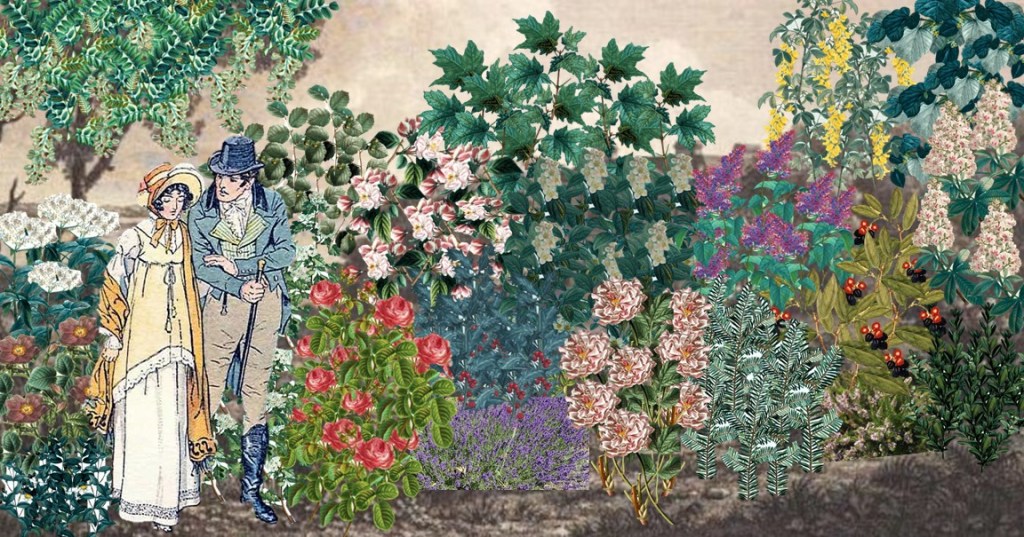
The header was created using several of the botanical illustrations referenced below, along with a background picture of an estate and an illustration from Emma by C. E. Brock. Most of these flowers would bloom in May. Size and height do not necessarily correspond to how they would look in a real garden (e.g., some flowers are bigger) and some shrubs have dwarf varieties that were used in borders (as the box and yews are used here). The shrubs and trees (using Austen’s name for them, with any alternative names in parentheses) in the header in order from top row to the bottom row (L-R): highest row: acacia (US: black locust) (II-6), hazel (V-7), maple (II-3), laburnum (III-6), and lime (US: linden) (I-4); second highest row: elder (V-3), hawthorn (V-1), crabapple (IV-4), syringa (US: mock orange) (VI-1), lilac, (VI-6), horse chestnut (III-3); third row: sweetbriar rose (VI-4), cabbage rose (VI-3), holly (III-1), tree peony (IV-5), yew (III-2), cherry or common laurel (V-5); lowest row: myrtle (VI-2), lavender (photo by author, illustration VI-7), heath (photo by author, illustration VI-6), and box (V-4).
Background image: “Cadland Park in Hampshire” from Watts, William. The Seats of the Nobility and Gentry, in a Collection of ….views, … with Descriptions of Each View. United Kingdom, 1779 Watts Seats of Nobility Link Digitized by the Austrian National Library. This book also contains an image of Godmersham Park, the estate of Austen’s brother Edward Austen Knight, who owned a copy of this book.
Mr. Knightley and Emma: “Most beloved Emma, tell me at once” tinted line drawing by C. E. Brock 1898. Brock Emma Proposal Illustration (accessed 6/9/25.)
Illustration 2: Trees and Shrubs Over 30 Feet; Rows I, II, and III
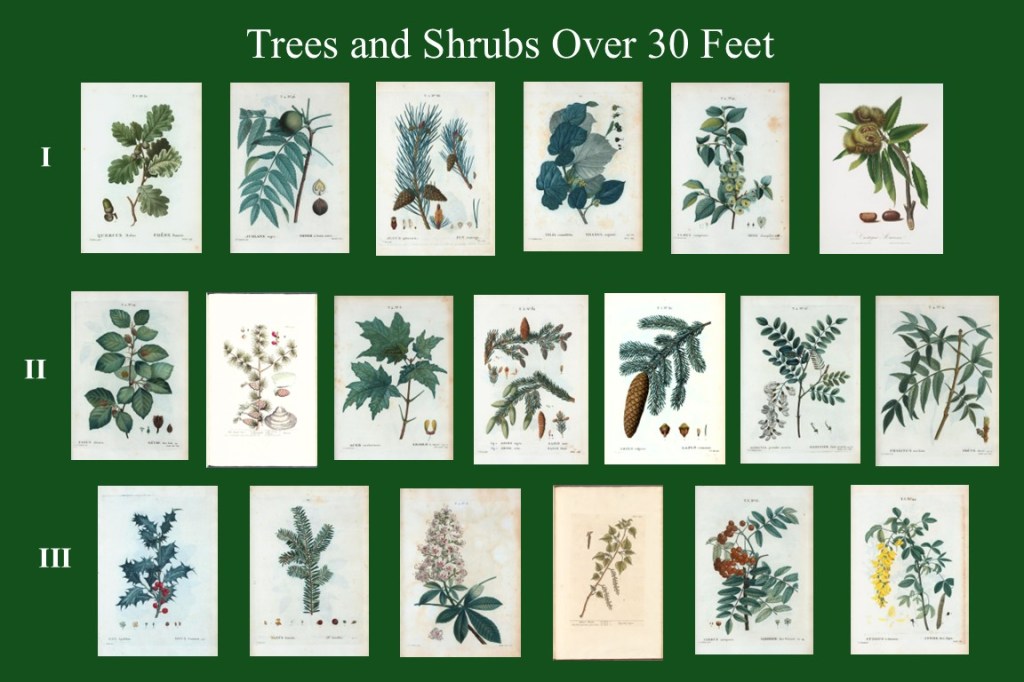
I Top Row, Left to Right
I-1 Oak, English (Quercus robur) Redouté Rare Book Division, The New York Public Library. “Quercus robur = Chéne rouvre. [Pedunculate Oak, Truffle Oak, Common Oak, English Oak. Irish Dair]” The New York Public Library Digital Collections. 1801 – 1819. English Oak Print
I-2 Walnut (Juglans regia or nigra) Redouté Rare Book Division, The New York Public Library. “Juglans nigra = Noyer à fruits noirs. [Black walnut]” The New York Public Library Digital Collections. 1801 – 1819. Walnut Print
I-3 Pines, Scots (Called “Scotch firs” in NA and by Meader in 1779; Pinus sylvestris) Redouté Rare Book Division, The New York Public Library. “Pinus sylvestris = Pin sauvage. [Scots pine]” The New York Public Library Digital Collections. 1801 – 1819. Scots Pine Print
I-4 Lime, Common (US: Linden; Tilia x europaea) Redouté Rare Book Division, The New York Public Library. “Tilia rotundifolia = Tilleul argentè.” The New York Public Library Digital Collections. 1801 – 1819. Common Lime Print
I-5 Elm, English (Ulmus minor/procera) Redouté Rare Book Division, The New York Public Library. “Ulmus campestris = Orme champêtre.” The New York Public Library Digital Collections. 1801 – 1819. Elm Print
I-6 Chestnut, Spanish (Currently called Sweet Chestnut; Castanea sativia) Redouté Rare Book Division, The New York Public Library. “Castagna marrona. [Castanea sativa; Spanish chestnut]” The New York Public Library Digital Collections. 1817 – 1839. Spanish Chestnut Print
II Middle Row, Left to Right
II-1 Beech, common (Fagus sylvatica) Redouté Rare Book Division, The New York Public Library. “Fagus silvatica = Hêtre des bois.” The New York Public Library Digital Collections. 1801 – 1819. Beech Print
II-2 Larch, European (Larix decidua) Blackwell, Elizabeth. A Curious Herbal Containing Five Hundred Cuts of the Most Useful Plants which are Now Used in the Practice of Physick Engraved… by Elizabeth Blackwell…. United Kingdom, John Nourse, 1739/1751. George Arents Collection, The New York Public Library. “The larch tree” The New York Public Library Digital Collections. 1739. Larch Print
II-3 Maple, Sugar (Acer saccharum; native English maple, Acer campestre, is a much smaller tree than a sugar maple and taller specimens would be desired in the shrubbery) Redouté Rare Book Division, The New York Public Library. “Acer saccharinum = Erable à sucre. [Sugar Maple or Rock Maple]” The New York Public Library Digital Collections. 1801 – 1819. Sugar Maple Print
II-4 Firs, Silver (Abies alba) Redouté Rare Book Division, The New York Public Library. “Fig. 1. Abies nigra = Sapin noir. Fig. 2. Abies alba = Sapin blanc.[Black spruce – European silver fir].” The New York Public Library Digital Collections. 1801 – 1819. Silver Fir Print
II-5 Spruce, Norway (Picea abies) Redouté Rare Book Division, The New York Public Library. “Abies vulgaris = Sapin commun. [Norway spruce]” The New York Public Library Digital Collections. 1801 – 1819. Norway Spruce Print
II-6 Acacia, (US: Black Locust; Robinia pseudoacacia) Redouté: Rare Book Division, The New York Public Library. “Robinia pseudo-acacia = Robinier faux acacia.” The New York Public Library Digital Collections. 1801 – 1819. Acacia Print
II-7 Ash (Fraxinus excelsior) Redouté Rare Book Division, The New York Public Library. “Fraxinus excelsior = Frène élevé. [European ash]” The New York Public Library Digital Collections. 1801 – 1819. Ash Print
III Bottom Row, Left to Right
III-1 Holly (Ilex aquifolium) Redouté Rare Book Division, The New York Public Library. “Ilex Aquifolium = Houx Commun. [Holly trees]” The New York Public Library Digital Collections. 1801 – 1819. Holly Print
III-2 Yew (Taxus baccata) Redouté Rare Book Division, The New York Public Library. “Taxus baccata = JF baccifère.” The New York Public Library Digital Collections. 1801 – 1819. Yew Print
III- 3 Chestnut, Horse (Aesculus hippocastanum) Redouté Rare Book Division, The New York Public Library. “Hippocastanum vulgare= Marronier d’Inde” The New York Public Library Digital Collections. 1801 – 1819. Horse Chestnut Print
III-4 Poplar, Lombardy (Populus nigra Italica) Blackwell, Elizabeth. A Curious Herbal Containing Five Hundred Cuts of the Most Useful Plants which are Now Used in the Practice of Physick Engraved… by Elizabeth Blackwell…. United Kingdom, John Nourse, 1739/1751.George Arents Collection, The New York Public Library. “Black poplar” The New York Public Library Digital Collections. 1751. Lombardy Poplar Print
III-5 Ash, Mountain (called Quickbeam by Miller, 1769; Current UK: Rowan; Sorbus aucuparia) Redouté Rare Book Division, The New York Public Library. “Sorbus aucuparia = Sorbier des Oiseaux. [Rowan or the European Mountain Ash tee]” The New York Public Library Digital Collections. 1801 – 1819. Mountain Ash Print
III-6 Laburnum (US: Golden Chain; Laburnum anagyoides; Meader called it Cytisus laburnum in 1779, as does Redouté) Redouté Rare Book Division, The New York Public Library. “Cytisus laburnum = Cytise des Alpes. [Common Laburnum, Scotch Laburnum or Alpine golden chain]” The New York Public Library Digital Collections. 1801 – 1819. Laburnum Print
Illustration 3 Trees and Shrubs Under About 30 Feet; Rows IV, V, VI
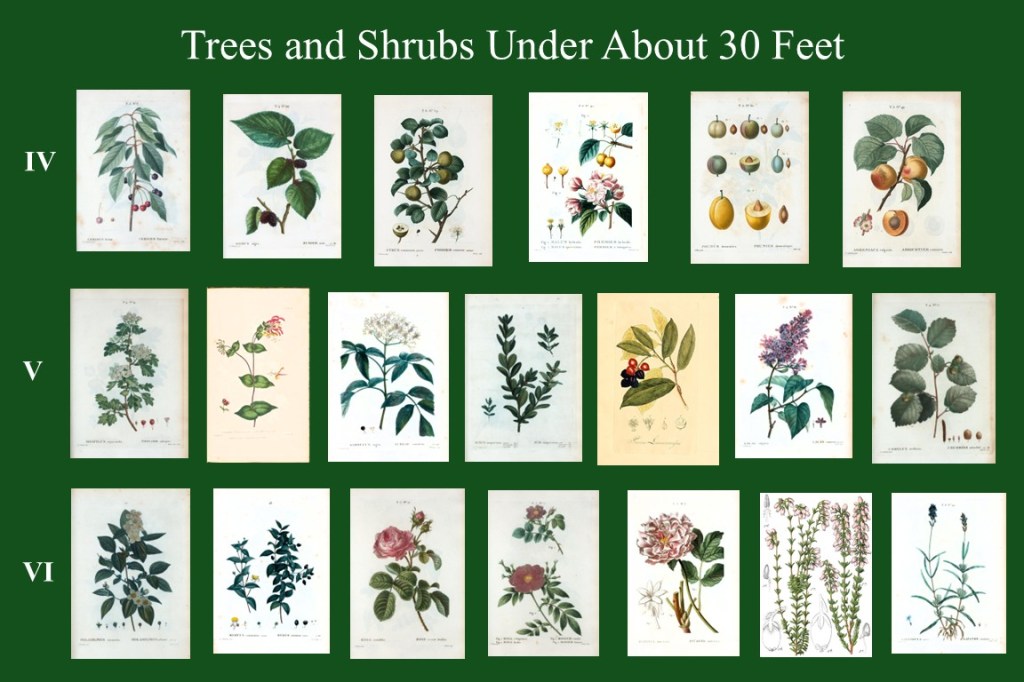
IV Top Row, Left to Right
IV-1 Cherries, Wild or Sweet (Prunus avium) Redouté Rare Book Division, The New York Public Library. “Cerasus avium = Cersier merisier. [Sweet cherry, Mazzard cherry]” The New York Public Library Digital Collections. 1801 – 1819. Cherry Print
IV-2 Mulberry (Morus nigra) Redouté Rare Book Division, The New York Public Library. “Morus nigra = Murier noir. [Black Mulberry]” The New York Public Library Digital Collections. 1801 – 1819. Black Mulberry Print
IV-3 Pear (Pyrus communis) Redouté Rare Book Division, The New York Public Library. “Pyrus communis sylvestris = Poirier commun sauvage. [Common pear].” The New York Public Library Digital Collections. 1801 – 1819. Pear Print
IV-4 Apple (Malus X; called Crab apple in Meader’s 1779 planting guide, “Pyrus malus” because at that time, apples were classed with pears) Redouté Rare Book Division, The New York Public Library. “Fig. 1. Malus hybrida = Pommier hybride. Fig. 2. Malus spectabilis = Pommier à bouquets. [Flowering crab apple – Chinese flowering apple]” The New York Public Library Digital Collections. 1801 – 1819. Crab Apple Print
IV-5 Plums, Orleans (Prunus domestica) Redouté Rare Book Division, The New York Public Library. “Prunus domestica = Prunier domestique.” The New York Public Library Digital Collections. 1801 – 1819. Plum Print
IV-6 Apricot (Prunus armeniaca) Redouté (this example is a common apricot, not a Moorpark variety which is mentioned in Mansfield Park). Rare Book Division, The New York Public Library. “Armeniaca vulgaris = Abricotier commun. [Apricot]” The New York Public Library Digital Collections. 1801 – 1819. Apricot Print
V Middle Row, Left to Right
V-1 Hawthorn, Common (Crataegus monogyna) Redouté Rare Book Division, The New York Public Library. “Mespillus oxyacantha = Neflier aubépine. [Common Hawthorn]” The New York Public Library Digital Collections. 1801 – 1819. Hawthorn Print
V-2 Honeysuckle (Lonicera periclymenum) Miller, Philip (author) and Ehret, Georg; Lancake, Richard; Miller, R; Thorp, Charles, (illustrators) Figures of beautiful, useful, and uncommon plants described in the gardeners’ dictionary : exhibited on three hundred copper plates … to which is added, an account of the classes and orders to which they belong, according to Linnaeus’s method, Vol 1, Image 81/Plate 74, online through Auckland, NZ Libraries Heritage Collections: Miller Book Link. This book was also owned by Austen’s brother Edward Austen Knight.
V-3 Elder, Black (Sambucus nigra) Redouté Rare Book Division, The New York Public Library. “Sambucus nigra = Sureau commun.” The New York Public Library Digital Collections. 1801 – 1819. Black Elder Print
V-4 Box, Common (Buxux semperviens) Redouté Rare Book Division, The New York Public Library. “Buxus sempervirens = Buis sempervirens.” The New York Public Library Digital Collections. 1801 – 1819. Box Print
V-5 Laurel, Cherry or Common (Prunus laurocerasus) Dietrich, David Nathanael Friedrich. Flora medica, oder, Abbildung der wichtigsten officinellen Pflanzen. no. 1, August Schmid, 1829, https://www.biodiversitylibrary.org/page/5296901. (Plate 6). Wikimedia Commons Link for Laurel Illustration
V-6 Lilacs (Syringa vulgaris) Redouté Rare Book Division, The New York Public Library. “Lilac vulgaris =Lilac commun.” The New York Public Library Digital Collections. 1801 – 1819. Lilac Print
V-7 Hazel (Corylus avellane) Redouté Rare Book Division, The New York Public Library. “Corylus avellana + Coudrier noisettier. [Cobnut or Hazelnut]” The New York Public Library Digital Collections. 1801 – 1819. Hazel Print
VI Bottom Row, Left to Right
VI-1 Syringa (US: Mock Orange; Philadelphus coronarius) Redouté Rare Book Division, The New York Public Library. “Philadelphus coronarius = Philadelphus odorant.” The New York Public Library Digital Collections. 1801 – 1819. Syringa Print
VI-2 Myrtle (Myrtus communis; a greenhouse plant according to both Loudon & Harvey) Redouté Rare Book Division, The New York Public Library. “Myrtus communis romana = Myrte commun romain.” The New York Public Library Digital Collections. 1801 – 1819. Myrtle Print
VI-3 Roses, Cabbage (Rosa centifolia; an example of a rose that might grow in a Regency garden) Redouté Rare Book Division, The New York Public Library. “Rosa centifolia = rose à cent feuilles. [Pale rose, Hundred-leaved or Cabbage rose]” The New York Public Library Digital Collections. 1801 – 1819. Cabbage Rose Print
VI-4 Rose, Sweetbriar (Rosa eglanteria or rubiginosa) Rare Book Division, The New York Public Library. “Fig. 1. Rosa rubiginosa = Rosier rouillè. Fig. 2. Rosa lupida = Rosier luisant. [Sweet-briar, Manning’s blush, Lord Penzance]” The New York Public Library Digital Collections. 1801 – 1819. Sweetbriar Rose Print
VI-5 Peony Tree (Paeonia Moutan; the regular peony would be in the flower beds and a tree peony would be used in a shrubbery) Redouté Rare Book Division, The New York Public Library. “Pæonia moutan = Pivoine moutan. [Tree peony]” The New York Public Library Digital Collections. 1801 – 1819. Tree Peony Print
VI-6 Heath (US: Heather; Erica cinerea) Illustration by Jacob Sturm in Johann Sturm Deutschlands Flora in Abbildungen (1796) Wikimedia Commons Heath Illustration File
VI-7 Lavender (Lavandula angustifolia) Redouté, Rare Book Division, The New York Public Library. “Lavandula spica = Lavande commune. [Broad-leaved lavender or aspic]” The New York Public Library Digital Collections. 1801 – 1819. Lavender Print
Illustration Set 4 Miscellaneous Shrubbery Prints
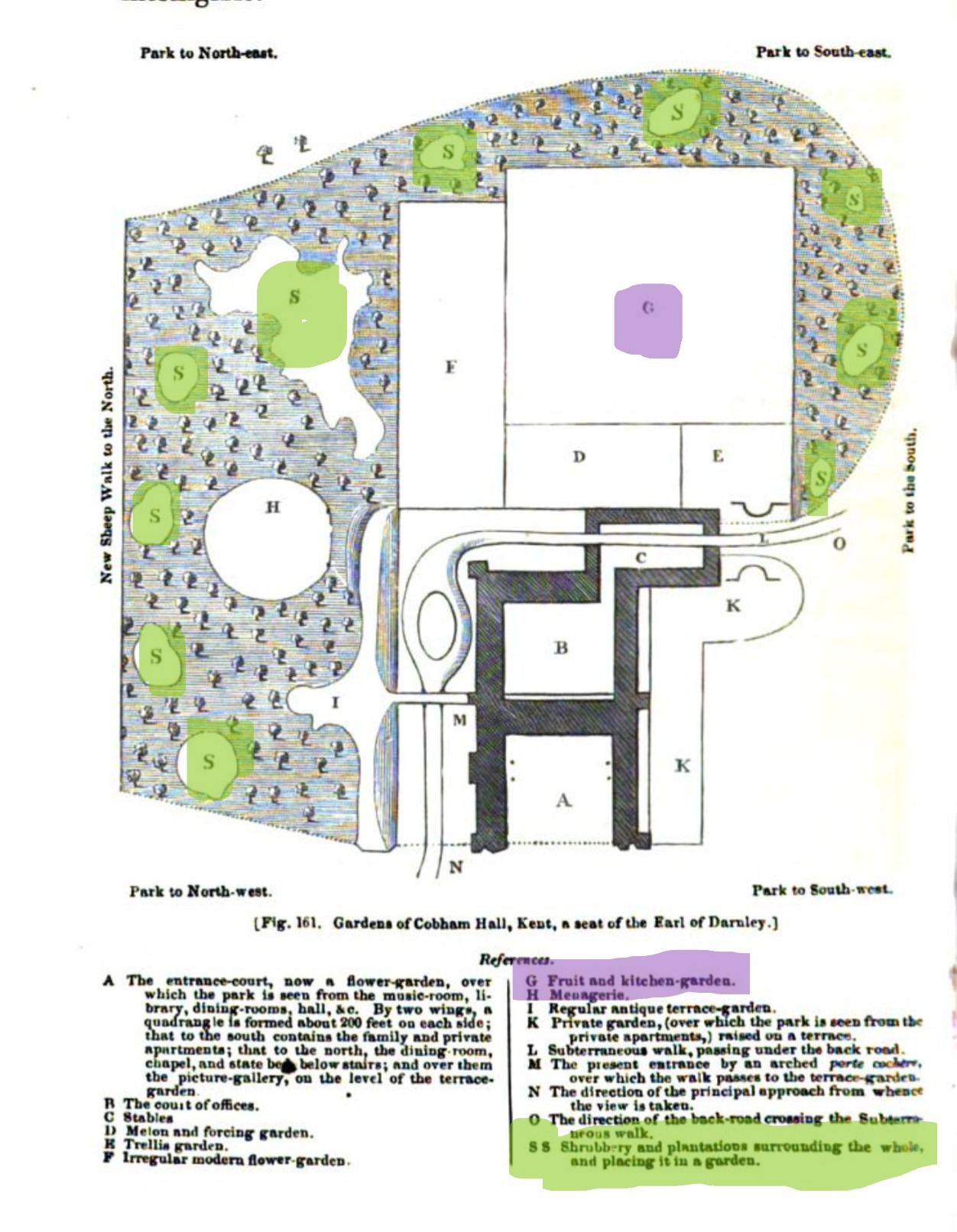
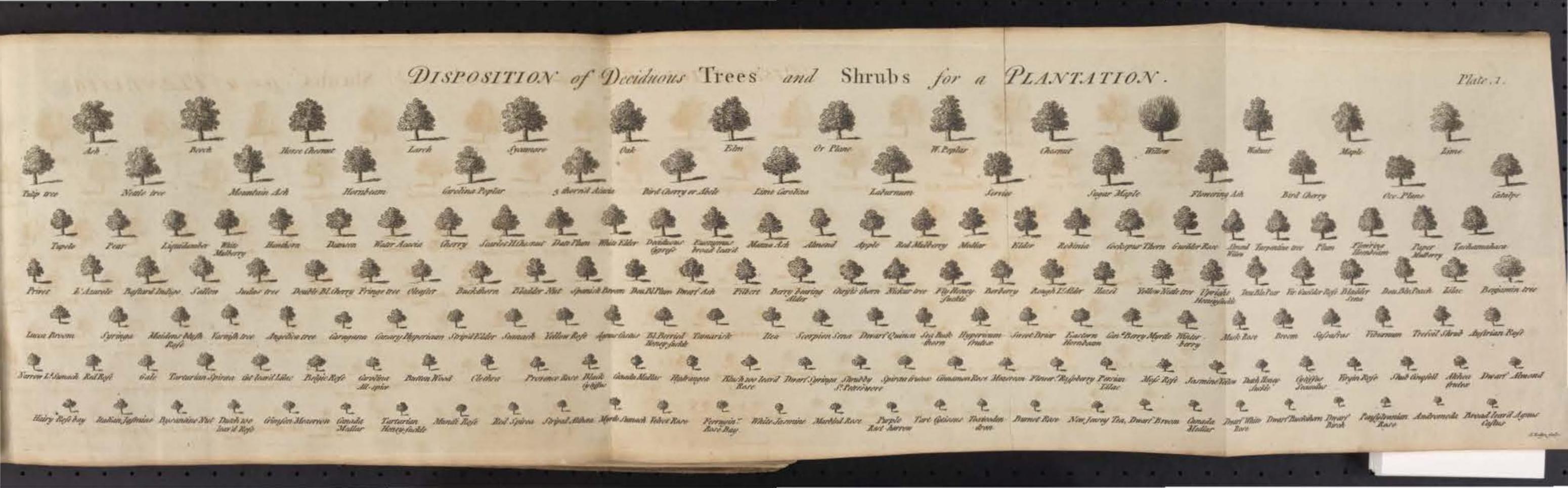
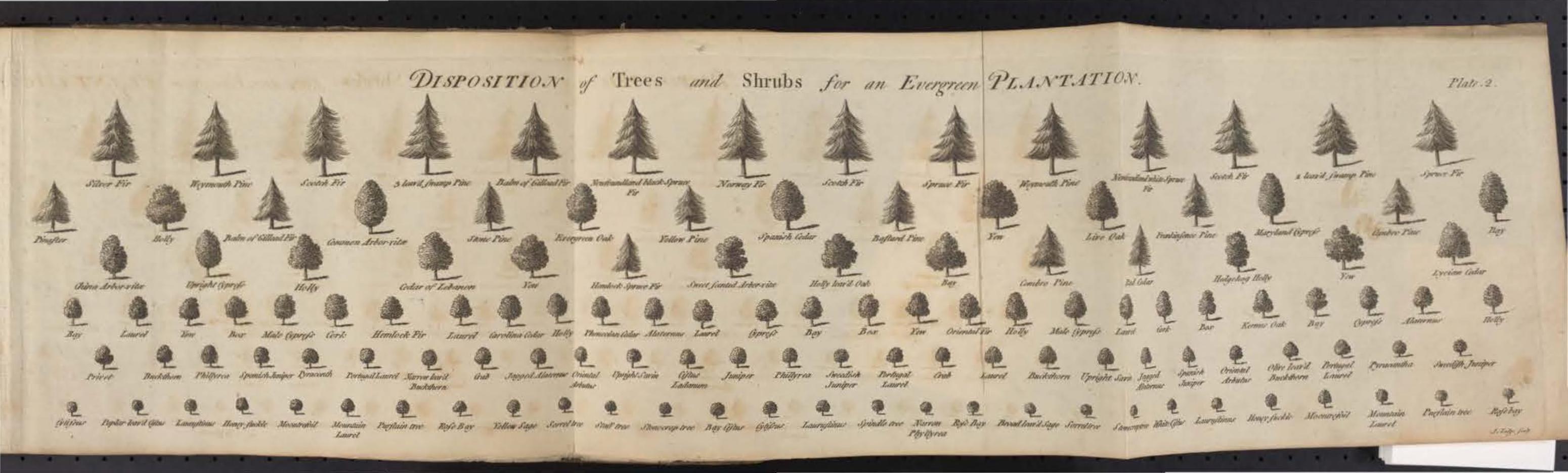
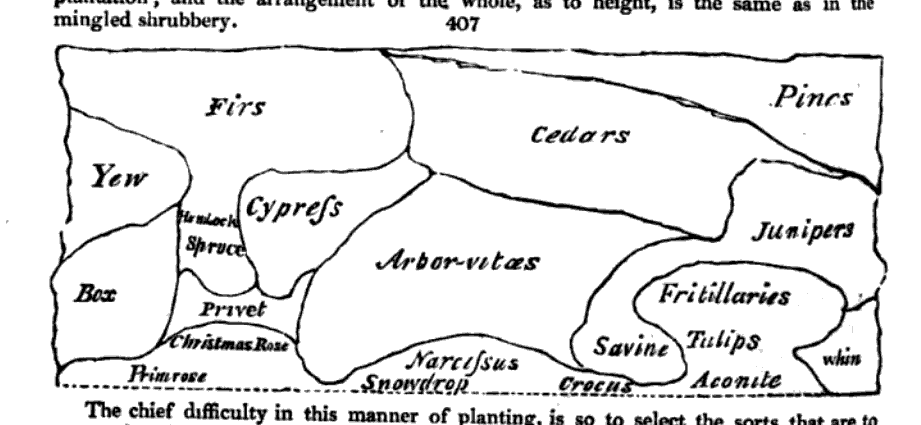


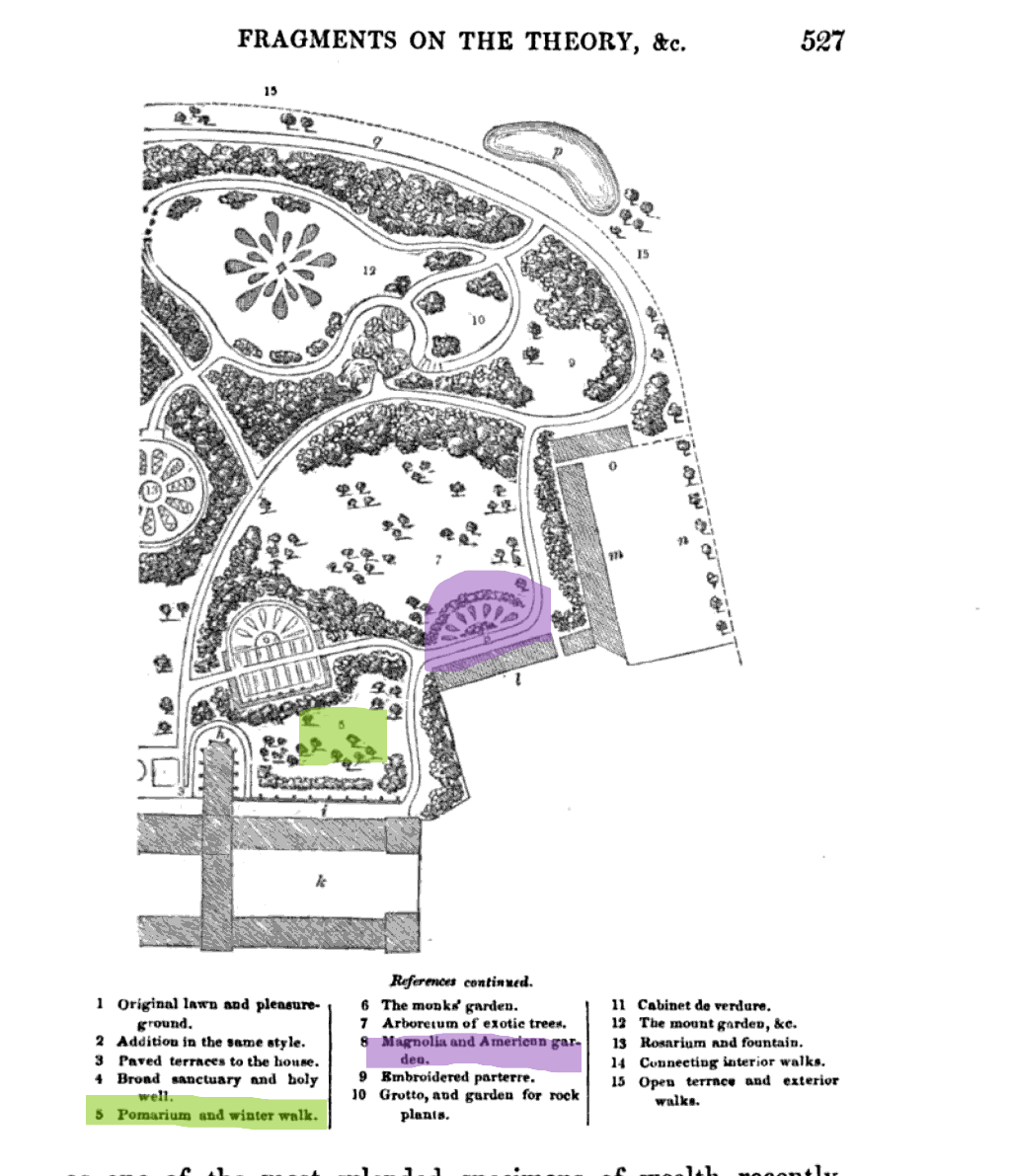
Illustration 4.1 “Gardens of Cobham Hall, Kent, seat of the Earl of Darnley” in Repton, Humphry. Fragments on the Theory and Practice of Landscape Gardening (1816), digital version available in Humphry Repton The Landscape Gardening and Landscape Architecture of the Late Humphrey Repton, Esq Being His Entire Works on These Subjects, JC Loudon ed. 1840 digitized by the U. of Michigan, p. 420. Repton’s Complete Works Link
Illustration 4.2 “Disposition of Deciduous Trees and Shrubs for a Plantation” Meader Deciduous Trees and Shrubs Illustration
Illustration 4.3 “Disposition of Trees and Shrubs for an Evergreen Plantation” Meader Evergreen Trees and Shrubs Illustration both in: Meader, James. The Planter’s Guide, or, Pleasure Gardener’s Companion : Giving Plain Directions, with Observations, for the Proper Disposition and Management of the Various Trees and Shrubs for a Pleasure Garden Plantation to Which Is Added, a List of Hardy Trees and Shrubs for Ornamenting Such Gardens … with a Catalogue of the Principal Varieties of Each Kind : Embellished with Copper-Plates Proper to the Subject. Printed for G. Robinson, No. 25 Paternoster-Row, 1779. Book from the US Department of Agriculture, National Agricultural Library.
Illustration 4.4 “The massed or grouped manner of planting a shrubbery” from Loudon, John Claudius. An Encyclopædia of Gardening: Comprising the Theory and Practice of Horticulture, Floriculture, Arboriculture, and Landscape Gardening. London: Longman. 1835. Reprinted in The English Landscape Garden Series, John Dixon Hunt, Ed., Garland Publishing, NY. 1982. Print, 2 vols. p. 1008. Online version available at: Loudon’s Encyclopedia of Gardening Link (digitized by the University of Michigan)
Illustration 4.5 “Audley House in Essex” Watts, William. The Seats of the Nobility and Gentry, in a Collection of ….views, … with Descriptions of Each View. United Kingdom, 1779. Watts Seats of Nobility Link Digitized by the Austrian National Library.
Illustration 4.6 and 4.7 “Map shewing the arrangement proposed for the gardens at Ashridge” in Repton, Humphry. Fragments on the Theory and Practice of Landscape Gardening (1816), digital version available in “The Landscape Gardening and Landscape Architecture of the Late Humphrey Repton, Esq Being His Entire Works on These Subjects, JC Loudon ed. 1840 digitized by the U. of Michigan, p. 526-7. Highlights added. https://www.google.com/books/edition/The_Landscape_Gardening_and_Landscape_Ar/wmpTAAAAMAAJ?hl=en&gbpv=0
Illustration Set 5 Miscellaneous Garden Architectural Elements
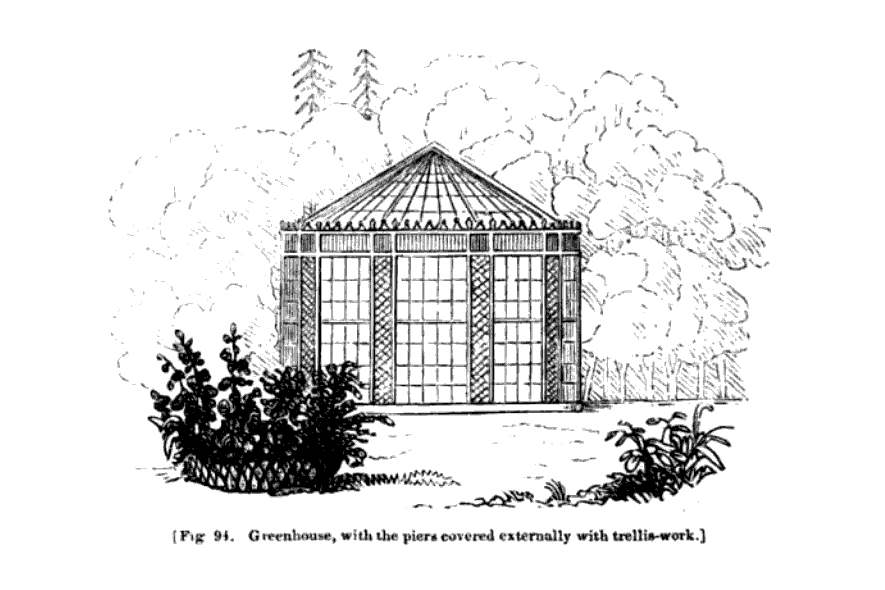
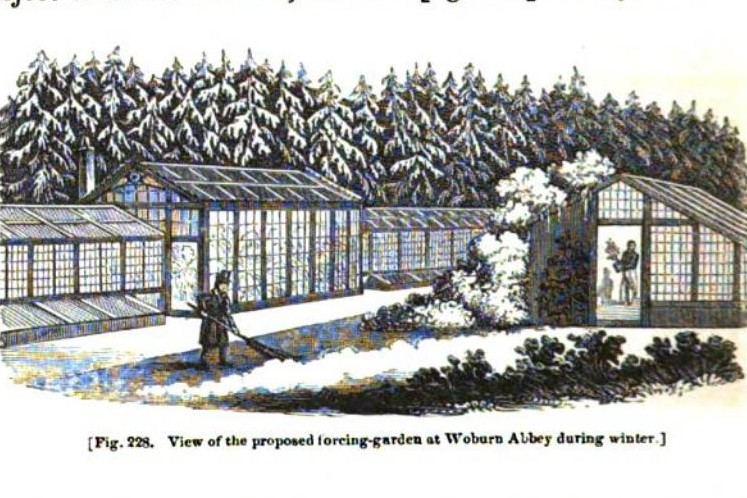

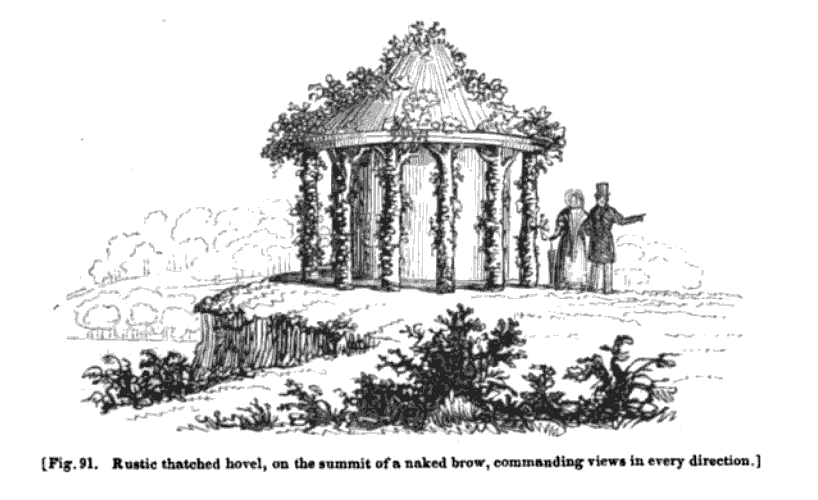
Illustration 5.1 “Greenhouse with Trellis Work” Repton, Humphry. Observations on the Theory and Practice of Landscape Gardening (1803), digital version available in The Landscape Gardening and Landscape Architecture of the Late Humphrey Repton, Esq Being His Entire Works on These Subjects, JC Loudon ed. 1840 digitized by the U. of Michigan, p. 258. Repton’s Complete Works
Illustration 5.2 “Forcing Gardens in Winter at Woburn Abbey” Repton, Humphry. Fragments on the Theory and Practice of Landscape Gardening (1816), digital version available in The Landscape Gardening and Landscape Architecture of the Late Humphrey Repton, Esq Being His Entire Works on These Subjects, JC Loudon ed. 1840 digitized by the U. of Michigan, p. 552. Repton’s Complete Works
Illustration 5.3 “Blaise Castle,” a watercolor by Humphry Repton from his Red Book for Blaise, 1796. Originally posted in: http://www.jasna.org/persuasions/printed/number7/lane.html and found via Wikimedia Commons Blaise Castle Image
Illustration 5.4 “Rustic Thatched Hovel” Repton, Humphry. Observations on the Theory and Practice of Landscape Gardening (1803), digital version available in The Landscape Gardening and Landscape Architecture of the Late Humphrey Repton, Esq Being His Entire Works on These Subjects, JC Loudon ed. 1840 digitized by the U. of Michigan, p. 255. Repton’s Complete Works
Illustrations compiled by Michele Larrow 2025

 JASNA E. Washington and N. Idaho Region